Member Login
  • Welcome
  • News
  • Supplier Showcase
  • Recognition
  • Newman Award
Welcome to the
World Aquatic Babies & Children Network!

A Unique Interactive Learn-to-Swim Program Support Network to Help You Succeed


World Aquatic Babies & Children Network (WABC) has become a leader in connecting learn-to-swim program directors and teachers for one simple reason: people like to learn and share with others in their same field as they maximize the development of their program and minimize their worries.

Small and large programs alike have applied the ideas gained with WABC because of they can discuss and as questions as they apply these ideas to their program immediately. One of the main reasons that programs are mediocre is lack of different teaching and administrative ideas beyond one’s initial training. WABC provides those ideas.

With directors and teachers from over 30 countries participating, teachers and directors have a large and very interesting world community to interact in. Those new to learn-to-swim get respect and help from the beginning as they take from a wide variety of successful people and programs. Experienced directors and teachers have a platform to show what they have accomplished while continuing to learn from others like themselves – yes, there are many people out there who’ve been in it for just as long and who are just as successful as you. Do you know them? Are they your friends?

WABC was founded in 1993 by internationally known swim teacher and author Virginia Hunt Newman beginning as an educational conference and then growing into a community where people can connect and get different ideas 24/7 to help them succeed. Since there are many sources of information one has only to look for the Virginia Hunt Newman name. If it isn’t authorized by her and the network, it’s not WABC.

If you're really serious and want to boost your program and teaching with a world of different ideas that will help you succeed, take a closer look at becoming a member of the World Aquatic Babies & Children Network.


Steve Graves
WABC President


10th WABC International Conference
Brighton, Oct. 7-9, 2009


Upcoming Events
May 2009
ISHOF Paragon Awards
New Zealand Seminar
French Swimming Teachers
August 2009
Pool / Spa Expo - China
September 2009
Instructors Meeting - Norway
October 2009
WABC Conference - England
USSSA Conference - USA
NSTA Conference - UK
November 2009
Instructors Conference - Germany


Jose Fontanelli from Brazil
2008 Newman Award honoree
St. Petersburg, Florida USA – February 3, 2009
2009 Virginia Hunt Newman International Award

Nominations for the 2009 Virginia Hunt Newman International Award have been received and the award will be presented Friday May 9, 2009 at ceremonies at the International Swimming Hall of Fame (ISHOF) in Ft. Lauderdale, Florida USA.

The award was originated in Newman’s honor by John Spannuth, friend and CEO of the United States Water Fitness Association. First awarded in 2004 to those who practiced Newman’s teaching philosophy of using gentle methods and progressions in working with babies and young children in the pool. Recipients have come from Norway, Japan, Brazil and the United States thus far. Announcement will come in April and the recipient will be on hand to receive the award at the ISHOF ceremonies.


St. Petersburg, Florida USA – October 1, 2008
WABC 10th Aims for Brighton

WABC will go to the United Kingdom and specifically the "City by the Sea" Brighton, England on 7-9 October, 2009 with pre and post conference activities scheduled as well.

Brighton is not only a popular choice among Brits for a holiday but also frequent choice for conferences by associations within the Kingdom.


The Conference will be the 10th biennial gathering of leading learn-to-swim program directors and teachers and the first time the organization has come to England. The 2007 conference held in St Petersburg, Florida USA drew participants from 24 countries.

The conference website WABC2009.com has been set up and from which conference information and registration information will unfold. Take a look! Questions can be directed to the WABC at office@WABCswim.com


Adventure Swim
AdventureSwim.com developed from round the world explorations - products cover a broad range of supplies to help students in any exciting learn to swim program.

• Kick-Speed-Peekaboo-and Mini Play Boards.
• Swim diapers, swim caps & flippers
• Backpack-Belt-Muscle Arm and Red Rescue Support Floats
• Swim bars and pull buoys
• Wetsuits
• Circular and rectangle mirrors & rainbuckets
• and new items coming

Ed Pemberton
AdventureSwim.com
Tel. 1 865.691.2525
1332 Scotsbury Circle
Knoxville, TN 37919
United States of America

Aquatic Consulting Services

Alison Osinski is the principal–owner of Aquatic Consulting Services, located in San Diego, California, specializing in aquatic risk management, and aquatic facility design, management and operation. Services include: site inspections, pool design and renovation projects, staff screening and selection, lifeguard audits, expert test- imony, equipment specific-ation and testing, pool operator training and certification courses, and water quality analysis.

Alison Osinski Ph.D.
Aquatic Consulting Services
AlisonOsinski.com
Tel. 1 619.602.4435
1220 Rosecrans Street #915
San Diego, California 92106
United States of America

Gulbenkian Swim, Inc.

At Gulbenkian Swim Inc. we have the products you want, when you want them. As a family-run business, we have been distributing the highest-quality swim and lifeguard equipment at competitive prices for over six decades. Tap into our experience. Learn to swim directors know to turn to Gulbenkian for items for retailing and use in their program and - goggles, apparel for students, teachers and guard staff, swim equipment, accessories, logo swim caps and other swim program needs.

Ed Gulbenkian, Sr. & Jr.
Gulbenkian Swim, Inc.
GulbenkianSwim.com
Tel. Toll Free in USA: 1 800.431.2586
Phone: 1 914 747-3240
70 Memorial Plaza
Pleasantville, New York 10570
United States of America

IMSEVIMSE

IMSEVIMSE USA specializes in cloth diapers - diaper covers -- mother and baby products. Colorful Swim Diapers. Also check out their All-in-One Diaper that has a waterproof outer, easy closures, and choice of micro fleece or organic cotton terry flaps close to baby's skin. Also NEW! are their IMSEVIMSE water shoes - pink or blue - for tiny feet. All packaged for attractive resale. Quality merchandise, excellent service for swim programs of the same mind.

Rose Kellman
IMSEVIMSE
imsevimse.us
Tel. 1 615.662.2466
Fax 1 615.662.4779
P.O. Box 218037
Nashville, TN 37221
United States of America

SplashAbout

Safety . Comfort . Security The children's safety swimwear specialists. We make gorgeous and essential products to protect babies and children in and around water. Splash About will make your child's and students' life safer, easier, and quite simply...MORE FUN!! See our online product catalogues that includes the finest neoprene suits, float suites and jackets, sun safe wear, baby swimming nappies, and other various spashabits that boost the swimming experience.

Desri Goodwin
SplashAbout
SplashAbout.net
(From outside France)
Telephone: 0033 545 625396
Fax: 0033 567 699407

(Within France)
Telephone: 05 45 62 53 96
Fax: 05 67 69 94 07

By mail:
Splash About
12 Chemin de Mouillac
Mouillac 16290 St. Saturnin
France

Swim Lessons University

The Swim Professor and Swim Lesson University are your guaranteed blue print for teaching children to swim. The Swim Professor, Jim Reiser has created a wide variety of products that can help you improve the teaching - learning process in your learn to swim program. Products range from DVD's demonstration teaching strategies to print materials such as lessons plans & water safety materials to learning equipment for you to use as well as sell to your program.

Jim Reiser, M.S.
The Swim Professor
SwimLessonsUniversity.com
Tel: 1 866-498-7946 toll free
swimprofessor@sc.rr.com
Free: 888.333.4647
P.O. Box 290760
Columbia, SC 2929
United States of America

Warm Belly Wetsuits

Warm Belly Wetsuits for kids are comfortable adjustable Neoprene wetsuits that are specially designed in 5 sizes for ages 6 months to 12 years old. Adjustable, each size can be worn for years as the child grows. Our quality 2 mm (1/8") nylon covered Neoprene makes for better insulation and comfort. Now your students can concentrate on the lesson and have a garment for recreational use too. Our wetsuits are ideal for use at the pool, at the lake, river, or beach, anywhere kids and water get together.

Greg Colyar
Warm Belly Wetsuits
WarmBelly.com
Tel. 1-888 WARM KID (1-888-927-6543)
60 Beauchamp Rd. Suite 3
Eureka, CA 95503
United States of America

Your
Logo
Here!
Your Company Here!

Become a WABC Supporting Partner – benefits include having your info and link to your website here for program directors and teachers to act on.


Do you know a supplier of goods or services that should be listed here?
Email WABC at Office@WABCswim.com


John Bainbridge
for his efforts in advancing baby and young children’s swimming and for being a guiding-light to those involved in aquatic programs in the United States, Australia, and around the world.
Australian Swim Schools

Lulu Cisneros
for her efforts in advancing baby swimming and for being a guiding-light to those involved in aquatic programs in Mexico, and in Central and South America, and around the world.
Lulu Cisneros Educacion Acquatica

Sharron Crowley
for her efforts in advancing baby swimming and for being a guiding-light to those involved in aquatic programs in Canada and around the world.
Aquaventures Swim Centre

Foo Chee Han
for his efforts in advancing baby swimming. And for being a guiding-light to those involved in aquatic programs in Singapore, England, and around the world.
The Aquatic Education Centre (TAEC)

Eugenie Horn Enge
for her efforts in advancing baby swimming and for being a guiding-light to those involved in aquatic programs in Norway and around the world.
Norges BabysvØmmeforbund

Björn Nybakken
for his efforts in advancing baby swimming and for being a guiding-light to those involved in aquatic programs in Norway and around the world.

Noriko (Niko) Saito
for her efforts in advancing baby swimming and for being a guiding-light to those involved in aquatic programs in Japan and around the world.
Saito Aquatic Academy

Nell White
for her efforts in advancing baby swimming. And for being a guiding-light to those involved in aquatic programs in South Africa and around the world.
Aquatots Swim Program

Jackie Young
WABC Chairman's Award 2007 for her support and efforts in the development of World Aquatic Babies Congress over the years and of the World Aquatic Babies & Children Network.
SWIMBABES™

  Dr. Ilona Autti-Ramo
Kenneth Karlsson
Pirkko Karvonen

Each having made unique contributions toward the introduction and development of aquatic baby programs to Finland and around the world.


Do you know someone who should be recognized here?
Email WABC at Office@WABCswim.com


Virginia Hunt Newman International Award

The purpose of this annual award is to carry on the name of Ginny "The Mother of Infant Swimming" Newman and her philosophy of teaching babies to swim in a kind, loving, caring, and gentle way so they learn to love the water!

Françoise Freedman
2009 VHN Award Winner
Françoise Freedman, with a Ph.D. from Cambridge University, has more than twenty years experience teaching and educating instructors in water babies programs from her London area homebase. She founded and operates Birthlight - an organization focusing on a holistic approach to pregnancy, birth and babyhood that includes an original water babies program and a pre and postnatal aquanatal program.

Growing up as a competitive swimmer in the central region of France Françoise credits her coaches with instilling a drive for excellence without losing the fun of swimming. As a teen she spent summers teaching reluctant children and learned that gentle progressions got children happily relaxing and floating in preparation for more learning more advanced skills.

Later as a young fieldworker in Peruvian Amazonia, swimming was again a useful and natural activity – whether to dive down to catch fish in the streams that flow from the Andes or as a daily recreational treat for all children or for bathing. She saw older children teaching little tots to swim as part of looking after them as well as parents crossing rivers with babes on their backs. Francoise was very much in a natural water environment and thereby also observed the movements of pink dolphins, otters and other water creatures swimming with their young.

Returning to London to continue her education academically as well as aquatically, she set up a small group of families who were interested in ‘swimming with their babies’ and incorporated the gentle playful ways witnessed in the Amazon. The water sessions became the highlight of each week in Cambridge – Françoise then having children of her own. She states that Virginia Hunt Newman’s book Teaching an Infant to Swim was an early inspiration to teaching babies and young children.

The presentation of her first film ‘Water Parenting’ in 1995 launched the Birthlight approach to infant aquatics with a focus on affective communication between parents and babies in a water environment. The film conveyed the message that water could be conducive to an easier birth, in the water or not, and that it could also help parents bond with their babies at any time by finding ease together in the water.

Her video ‘Swimming with Babies’ came next and then her book ‘Water Babies’. Also working at the time as an academic medical anthropologist at Cambridge University Françoise says that her university colleagues were surprised to see a double page article on Birthlight baby swimming in the Times, and then on the front page of the Daily Mail – the leading UK newspapers.

Françoise continues to impart gentle ways through her Birthlight organization - making sure teachers always create a wave of warmth and a good time in the water for children and parents.

José Fontanelli
2008 VHN Award Winner
José Fontanelli, swim teacher and program director from São Paulo, Brazil received the Virginia Hunt Newman International Award May 11, 2007 at the International Swimming Hall of Fame annual award ceremonies in Ft Lauderdale, Florida, USA.

Swimming teacher José Fontanelli has a passion for baby swimming. And the word ‘affectionate’ describes his manner in having taught tens of thousands of young pupils over the past 40 years in his homeland of Sao Paulo, Brazil. ‘Fonta’ as he is called loves his babies!

Fontanelli uses research and techniques in a variety of disciplines to speed their development and enhance the comfort of students and their parents who accompany them in the pool. Research has shown that children in utero recognize different people outside the womb and their mother’s reaction to those people. Applying this, Fontanelli was among the first in the world to extend the ‘starting time’ for a baby swimming to the pre-natal period – where expectant mothers come to the pool for movement and exercise experiences. Mother benefits and at the same time becomes comfortable with the pool classroom and with the teacher. After baby is born the mother returns for ‘baby & parent’ classes, and mother is well at ease and can concentrate on baby and the class program.

Research has shown that special difficulties during gestation and child birth are associated with future problems of socialization within children. Fontanelli asks mothers about their pregnancy and delivery to better know the child.

Both parents join baby in pre-natal and beginning classes at his Fontanelli Swim Club. Classes are relaxed. It is not common for babies to be breast-fed during class again a blending natural ways within his aquatic classroom. Laughter, song and activity are primary components. The joy created makes learning to swim inevitable.

Fontanelli has authored the book Between Pleasure and Technique – focusing on aquatic development of babies and toddlers. He has been featured in newspaper and magazine articles and is often a presenter at swim teacher conferences throughout Latin and South America. José has trained numerous teachers in his affectionate, child-centered, non-traumatic methods and has been the organizer of numerous educational conferences and training clinics on baby swimming and water exercise for pregnant mothers.

Yoko Yagishita
2007 VHN Award Winner
Yoko Yagishita swim teacher and program director from Tokyo, Japan received the Virginia Hunt Newman Award May 11, 2007 at the International Swimming Hall of Fame annual award ceremonies in Ft Lauderdale, Florida, USA.

Yoko receives award from Steve Graves WABC PresidentYagishita is the fourth to receive the award presented each year by WABC, the Newman Family & the International Swimming Hall of Fame (ISHOF) to a person who is a disciple of Virginia Hunt Newman carrying on Newman's name and her philosophy of teaching babies to swim in a kind, loving, caring, and gentle way so they learn to love the water. More about Yagishita

Yagishita accepted the award at the annual ISHOF ceremonies speaking in English and saying to the audience of 200 people ...

"Thank you very much and good evening, ladies and gentlemen. I am Yoko Yagishita.

First of all, I would like to thank all members of International Swimming Hall Of Fame for giving me this great honor. I was never a competitive swimmer. The only thing I have been doing for nearly 30 years or so is to teach my little babies how to enjoy water. I never dreamed of receiving this big award at the Hall of Fame. So, it impressed me so much to know that there are people who always watch you even if you are playing humble role.

Yagashita and Virginia Hunt Newman 1995It was in 1978 that I first met baby swimming with my baby son. I was quite interested so I decided to be a baby swim instructor and got a qualification in 1980. However, the teaching method was a traditional one and I never dreamed of any other system until I attended the World Aquatic Baby Congress in 1995 at Melbourne, Australia. It was a kind of culture shock for me. The babies are smiling on and under water with happy faces and laughter. At that time, my English was also poor and I could not tell where or who was doing this but somehow, I managed to reach Rob and Kathy McKay’s Lifestyle Swimming in 1996. I learned a lot there, the biggest thing was the philosophy of Ms. Virginia Hunt Newman, the mother of baby swimming. Her child-centered way of baby swimming was a big shock for me and I thought this is what I was looking for.

Since then, I have been trying to spread this child-centered method. Although it has not yet become the main stream, it is becoming more popular in Japan.

I know it is not so easy but I will try my very best to have more and more babies enjoy the life on and under water.

Last but not the least, I would like to thank International Swimming Hall Of Fame for this great honor and also to all those who have supported me.

Thank you very much for listening."

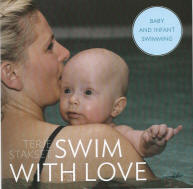
Terje Stakset
2006 VHN Award Winner
Terje Stakset was selected for as the 2006 recipient for his commitment and being a wonderful example of Virginia Newman's gentle methods of teaching babies to swim, giving voice to those not yet able to speak for themselves.

Terje represents Virginia's philosophy not only in the pool as an instructor, but also in his conference presentations and uniquely in the theater as the producer of his one-man stage show of the evolution of gentle baby swimming. This ingenious production pays tribute to Virginia, and follows her vision of using play and kindness, not force and tears to teach babies to swim. His father was a swimming teacher for 25 years.

Terje traveled from his home in Norway to receive the award in Fort Lauderdale, Florida at the Swimming Hall of Fame's annual ceremonies, on May 12, 2006. Mr. Stakset is the third individual to receive this prestigious international recognition.

Terje, a graduate of the Business Academy of Oslo, is currently manager of the Norwegian Lifesaving Federation in Oslo and Baerum. He has been an instructor in swimming and life saving for 27 years and a teacher of baby swimming for 15 years. Moreover, he trains instructors in swimming, baby swimming, lifesaving, CPR and first aid and for 27 years he was the vice-president of the Norwegian Lifesaving Association.

In 1990 and 1991, his team won the Norwegian National Lifesaving Championship for male teams. In 1992, he represented Norway in the World Championships in Sweden.

Terje's baby swim school is part of the Oslo and Baerum District of the Norwegian Lifesaving Association. He has been an advocate of Virginia Hunt Newman's gentle approach to teaching babies to swim. He has been an international speaker at Newman's World Aquatic Baby Congress conferences in France and Hawaii as well as a international conference in Helsinki, Finland. In October 2004 he was Director for the Nordic Conference on Baby Swimming in Oslo. In 2002 he produced a baby swim video "The Truthful Face of Baby Swim". In April 2006 he completed a second DVD titled: "How to Teach Young Children to Swim."

Terje is a wonderful example of Virginia's gentle methods of teaching babies to swim, giving voice to those not yet able to speak for themselves. Terje's leadership and commitment represent Virginia's philosophy not only in the pool as an instructor, but also in his conference presentations. Through his use of poetry and unique theatrical acting when producing his one-man stage show, he "shows off" the evolution of the gentle baby swimming approach. This ingenious production - entitled "Baby Swim Fro the Very Start and Into the Future" pays tribute to Virginia, and follows her vision of using play and kindness, not force and tears to teach babies to swim.

Using a poetic verse to describe his feelings for Virginia's method of teaching Terje writes:

Virginia Hunt Newman was a Pioneer,
And She Made It Quite Clear,
Non-Forceful is the Only Way,
And in That Direction it Has to Stay,
Be Gentle from the Very Start,
If You're Going to be Smart.

Terje is 47 years old, married and has two sons.

Steve Graves
2005 VHN Award Winner
For many years, Steve Graves has been helping to improve aquatic programs for young children on local, national and international levels.

Steve's leadership and promotion of Virginia Newman's non-traumatic style of teaching has been felt worldwide. In 1998, Virginia selected Steve to be President of her World Aquatic Babies Congress (WABC), the professional organization for swim teachers working with infants and toddlers, which Virginia founded in 1993. He put together world conferences on baby swimming in Toulouse, France (1999), Buenos Aires, Argentina (2001), and Honolulu, Hawaii (2003), which were attended by representatives from 34 countries. He developed WABC's website using it to send electronic, around-the-world newsletters on the subject of infant-toddler aquatic instruction. Hundreds of instructional articles were archived in several languages on the WABC website.

In 1988, Steve founded the National Swim School Association (NSSA), a trade association for swim school owners in the United States. He served as the association's President for the first five years, then as Executive Director through 2001. During this time, annual conferences included presentations by the leading international authorities on designing aquatic programs for young children.

In 2000 Steve received the Paragon Award at the International Swimming Hall of Fame. He had promoted aquatic safety by facilitating a large research study on the expectations of parents with regard to their expectations and results in having the children enrolledcreating infant-toddler teacher certification and public awareness programs in drowning prevention for NSSA. These programs greatly benefited NSSA's 1500 member swim teachers and the 160,000 students taught each year.

1997-2006 was a part-time Executive Director of the Florida West Coast Chapter of the Florida Swimming Pool Association, an affiliate of the Association of Pool and Spa Professionals (formerly NSPI). He brought attention to pool industry leaders on 'right thinking' with regard to backyard pool safety - that it wasn't just the parents job and it wasn't just learning to swim (which takes time) - that there is a collection of drowning prevention strategies that need to be applied to be a more complete preventative.

When it comes to teaching young children to swim, Steve like Virginia, feels that the gentle, positive approach is best.

A Normal, Illinois native and a former college All-American freestyle swimmer for Coach Archie Harris, at Illinois State University also in Normal, Steve was a swim coach, teacher and aquatic program director from 1969 to 1993 in Illinois, Arizona and Florida. Beyond his current association activities, Steve still found time to teach swimming a few hours a week in St. Petersburg, Florida. Says his university swim coach Archie Harris, "Steve did it on just plain hard work. He is a go-getter."

Rob Mckay
2004 VHN Award Winner
Rob McKay of Boca Raton, Florida USA has been named the first recipient of the Virginia Hunt Newman International Award. McKay accepted the award May 8th at ceremonies at the International Swimming Hall of Fame (ISHOF) annual awards ceremonies May 8, 2004 in Ft. Lauderdale. The newly created award to the person is presented to that person who "exemplifies the teaching philosophy of Virginia Hunt Newman" said Ed Newman, Virginia Newman's son.

Virginia Hunt Newman, 86, considered the "mother of infant swimming" is a pioneering advocate of the gentle, positive approach to teaching babies to swim, author of the first book on infant swimming, "Teaching an Infant to Swim" she is honored into both the International Swimming Hall of Fame and the National Swim School Hall of Fame.

McKay commented that "Virginia Hunt Newman is a "shining light" for her work with very young children. Virginia's love and respect for children, her support and consul to those seeking to teach babies to swim in a gentle manner has been constant inspiration to me. I treasure her friendship, her insight, her ethics, her vision."

The Newman Award will be Rob's second award housed in the perpetual awards area of the ISHOF. In 1999 Rob received the Paragon Award "for outstanding contribution to Aquatic Safety".

Rob McKay has spent 26 years of his adult career devoted to teaching infants to swim. It is no accident that it was also 23 years ago that Rob first met and was inspired by Virginia Hunt Newman.

Virginia's pioneering advocacy of a gentle, positive approach to teaching infants to swim instilled in Rob a passion to create the most stimulating, child-friendly, educationally sound and developmentally appropriate swim school possible.

Rob's mission along with his wife Kathy has resulted in his nationally acclaimed Lifestyle Swim School in Boca Raton, Florida and their instructional video series, "Diaper Dolphins". DK/Penguin Publishing of London/New York announces the world wide spring 2005 release of Rob and Kathy McKay's book, "Learn to Swim". The 128 page book outlines the couple's philosophy and features step-by-step how-to's for parents and teachers of children 6 months through 4 years old. As with all DK books, visually appealing photos and unique graphic layouts draw the reader to the page. Rob and Kathy's small swim students and their parents grace the pages of "Learn to Swim" as techniques and tips are shared for each age and stage. Learn to Swim is available at many stores including Barnes and Noble, Borders Book Store, Amazon.com, Target, Wal-Mart and Books a Million. The McKay's have also created an informational web site, "Baby Swimming-the Gentle Journey" at www.babyswimming.com.

The McKays have authored and been the featured subject of numerous newspaper and magazine articles nationally and internationally. Rob and Virginia were featured in a video press release on infant swimming for the national product release of Huggies brand "Little Swimmer's" diapers. They also appeared together in the Discovery Channel's "World of Wonder" program which aired in 50 countries during a 5 year period. Japan's Nippon TV network recently featured Rob, Kathy and their baby students in a special entitled "Charismatic Teachers".

A frequent speaker at national and international conferences and workshops, Rob is a board member of the World Aquatic Baby Congress and a member of the Congress of the ISHOF. He is a charter member of the National Swim School Association. McKay has trained numerous teachers in his gentle, child-paced, non-traumatic methods both from across the US and around the world including Great Britain, Norway, Sweden, Japan, Australia, New Zealand, Singapore and the Philippines.

A former high school All American swimmer from Cedar Rapids, Iowa and a collegiate scholar-athlete for Florida State University, Rob also held records as a Master's swimmer and continues to swim for health and fitness.


  • Our Founder
  • Ethics Code
  • Guidelines
  • About Us
World Renowned Baby Swim Teacher

Awards presented by Olympian Bob Mathias to young Ethan Wayne with actor and father John Wayne by his side. Virginia Hunt Newman assists Marisa Wayne
 
You might say Virginia Hunt Newman 'dove' her way into swim teaching.

From 1940 to 1948 Virginia Hunt (Newman) was a competitive diver at the Los Angeles Athletic Club.  She appeared in water shows for the WWII troops on behalf of the United Service Organization and the Hollywood Victory Committee.

In the 1940's Virginia dove at a water show at Ambassador Hotel in Los Angeles where another emerging baby swim teacher - Crystal Scarborough - routinely taught.   

Virginia started teaching swimming in 1950.  Around Los Angeles such instruction for babies could have included screaming and vomiting students.  (Virginia remembers visiting a pool where the teacher had pan on deck at the water's edge for students to vomit into.)  Parents were usually not included in the water with infant-toddlers classes during the 1950's.  "Students were taken into the water but really didn't seem to be doing very much in most cases" Virginia recalls.  She visited the programs conducted by Scarborough and Scarborough's sister Jen Loven.   

From 1951 to 1956 Virginia taught swimming and diving at Black Fox - a boys military school.  She also taught lessons in peoples' homes.  Students included children of movie stars and entertainers Harry Cohen, Jerry Lewis, Alan Lad, Bob Newhart, and Max Factor at the school.  

Side note: When school headmaster Major Gaver interviewed Virginia for the position he said that (male) teachers who'd been at the school a long time couldn't see how a little woman could manage these boys.  Virginia's response was - "Just sit back and watch!"  She got the job, stayed five years and commanded the respect of the boys and fellow teachers alike.  Virginia says it was one of the greatest teaching experiences of her career.

Among the Hollywood Stars

  Mary Crosby receives her Beginner's Certificate from American Red Cross - Los Angeles while Johnny Weissmuller, her mother Kathryn Crosby, and Virginia Hunt Newman look on.
In the early 1960's Virginia got a referral to teach children in a special family.  Virginia had been teaching obstetrician, Dr. Moss's children who also happen to be the doctor of Kathryn Crosby wife of singer and movie star Bing Crosby).   "Kathryn called and asked if I would teach her children, Mary Frances and Harry, too,"   Virginia said "Sure".   Since the Crosby home did not have a pool, she taught them at Dr. Moss's home. 

Virginia says both children were good students but Mary Frances was more outgoing and the 'perfect student'.  At age 2 years she could back float, jump in and swim 25 feet recovering up to the surface to get air as she went.  Virginia covered all the skills with the 2-year old that were then associated with the American Red Cross 'Beginner' test.

Regarding the amount of instruction given Virginia states:  "Mary Frances started swimming at age 10 months and she was almost 2 1/2 years old in February 1962.  We swam 3 times a week for 1/2 hour excluding vacations.  I don't recall either she or Harry staying home because of illness.  So it took about 175 to 180 hours of time in the water including play time for Mary Frances to learn the skills she needed to pass the Red Cross beginner's test.

Virginia contacted the Los Angeles area office of the Red Cross to secure a 'beginner' card for her student.  Given Mary Frances's achievements for her age and her famous father, local Red Cross Director Roger Plaisted agreed to present the card himself at poolside at the Moss residence in February of 1962 - hence the photo!

National magazines, newspapers and TV were present for the ceremony.  Famous swimmer and actor Johnny Weismuller came along with Plaisted.  Kathryn Crosby accompanied her daughter but Bing did not attend.  

Kathryn Crosby speaks while Virginia Hunt Newman and students are in the pool all with host Mike Douglas on the Mike Douglas television show.
 
Virginia felt that father Bing purposely chose to stay away to give his daughter the limelight on the special occasion covered by the media.  Virginia felt the national American Red Cross office didn't like it that such a young child had passed the beginner test and felt they took steps to keep that from happening in the future.  Mary Frances Crosby Brodka

Mary Frances demonstrated her swimming prior to receiving her card.  Virginia recalls:  "I didn't want to take her to a new and strange place for the demonstration even though she was quite outgoing so we held the ceremony at the Moss's home where the lessons had been all along.  I didn't want to take any chances knowing the entire media would be there.  I also didn't change my  swim suit from the one I wore in the lessons and I asked her mother not to let Mary Frances wear a different one either.  I treated it as though it were another lesson. Heavy, heavy hung over my head.  And luckily it was very successful." 

Virginia was also commissioned to teach children of actor John Wayne.     

Virginia said that she can vouch for John Wayne being a terrific person.  When Virginia asked if Wayne could attend an award ceremony for his children's swimming, an aid to Wayne interjected that his schedule would not permit it.  Wayne over road  the appointment saying, "Oh that can wait till Saturday, we can do this for Ginny."  ('Ginny' rather than Virginia as she was and is know by friends from the past.) 

Virginia also taught a daughter of author Harold Robbins - Adriana    When they met Virginia a the door of their home on the first lesson day, Adriana said "I am not going to put my face in" to which Virginia responded "Well you don't have to do anything that you don't want to do."   In working with Adriana, Virginia put her own face in and glance around the pool, came up and remarked to Adriana, "Do you know you have gold fish in your pool?"  "No we don't" said Adriana over and over again. But shortly there after, Adrian put her face in and rose to remark, "We also have an octopus in our pool!"

Admitting that she didn't know who Harold Robbins was, Virginia laughs when she recalls a conversation with Robbins' wife.  "We talked about my book (published in 1967) and she said, 'You know, my husband is a writer too'.  I said "Oh really what does he write?".  "Novels", his wife said.

Virginia also taught the daughter of Sonny & Cher - Chastity.  According to Virginia there was little to teach Chastity since father - Sonny - had already done a good job of it.  

Virginia has been featured in the New York Times and interviewed by Barbara Walters on the NBC Today Show.  She'd also made a trip to Philadelphia with Katherine Crosby to appear on the Mike Douglas TV Show.  Picture

A Rabbit Does The Trick

According to Virginia there was a chance meeting that would greatly shape her teaching style as recorded in her 1967  for the future.  Here husband was a producer and was filming a commercial for a bank wherein a rabbit had been trained to pick up a silver dollar and place it into a small bank.   Virginia was on the set when the commercial was being filmed and spoke with the person who'd trained the rabbit - a Dr. Shaw from the Univ. of Arkansas.  He said that in training the rabbit every time the animal would go near the bank, a bell would ring he'd be given food - positive reinforcement.   

That rabbit changed the face of infant swimming as Virginia went on to make applications to her teaching. She thought she'd try that with a friend's baby and was granted permission.  She knew also that babies like to please their parents.  Every time child did what Virginia wanted, she'd give praise.  Any action or response that was not desired would be largely ignored. 

In addition Virginia read about the work of scientists Pavlov and BF Skinner on positive reinforcement.  Later she gave students poker chips as reinforcement - the chips were kid-size, brightly colored and water proof.   

As a Side note - for her 80th birthday Virginia was given actual red, white, and blue poker chips with her contact information imprinted - serving as 'business cards'.    

The reinforcement of desired actions was used instead simply forcing the young students says Virginia.


1993 Honor Pioneer Contributor
FOR THE RECORD: Swimming instructor of infants; Produced film on how to dive springboard. 1967--published Teaching An Infant To Swim; Best know for developing the non-forceful, non-traumatic method of teaching infants to swim.

Virginia Hunt competed in swimming for the Indianapolis Athletic Club from 1932 to 1940, winning numerous Midwest and national titles. From 1940 to 1948 she competed in diving for the Los Angeles Athletic Club where she won several Southern Pacific Association titles and a national title.

During World War II, Virginia traveled with the United Service Organization and the Hollywood Victory Committee, appearing in water shows with Hall of Famers Johnny Weissmuller, Stubby Kruger, Buster Crabbe, and Dutch Smith, for the armed services.

Although she was quite successful as a swimmer and diver, Virginia is renowned for her accomplishments as an infant swimming instructor. She began teaching swimming to infants and pre-schoolers in 1950 and became an aquatic director and diving coach at a private boys' school. During this time, Virginia wrote and directed a series of films on springboard diving and served as Secretary of the Southern Pacific Association Diving Committee for two years.

In 1962 she came to a major turning point in her career. Her star student, two-year old Mary Crosby, daughter of entertainer Bing Crosby and his wife Kathryn successfully passed the skill test for the Red Cross Beginners Certificate. At this time, Mary was the youngest child in the history of the Red Cross to do this. So impressed with her achievements and the fact that she was the daughter of Bing Crosby, Mary's award was personally presented by the director of Red Cross Safety Services and Hall of Famer Johnny Weissmuller on national television and covered by Life, Look, and Time magazines and headlined in the Los Angeles newspapers.

This event led to the compiling of Virginia's methods in her book Teaching An Infant to Swim in 1967. It gave world-wide attention to non-forceful or non-traumatic teaching methods. Her book became so popular that it was published in England, Australia, Germany, Sweden, Italy, and Japan. She later published her next book Teaching Young Children to Swim and Dive, in 1969.

Besides her success with young Mary Crosby, Virginia was also the swimming instructor for the children of John Wayne, Bob Hope, Harry Cohen, Jerry Lewis, Alan Ladd, Bob Newhart, Max Factor, Sonny & Cher, and Danny DeVito and Rhea Perlman.

Her methods, distraction from normal fears associated with learning to swim and rewards for trying and performing skills, have been accepted by thousands of swim instructors world-wide.

For her accomplishments, Virginia received both the National Service Award in 1971 and National Honor Award in 1983 from the Aquatics Council of American Alliance of Health, Physical Education, Recreation and Dance. Virginia later opened Newman Swim Academy in Hollywood, California, in 1973 and became the executive director of the United States Swimming Foundation in 1980. In 1993 she was named an Honor Pioneer Contributor by the International Swimming Hall of Fame. In the same year Virginia conducted a world conference in Los Angeles for swim teachers naming it World Aquatic Babies Congress and thereafter started an organization by the same name. See About WABC section of this website.

© 1993 ISHOF, Inc.


An Educator's Code
principles and responsibilities of all aquatic educator professionals 

Since 1990 there have been periodic international educational gatherings of professionals involved in aquatic programs for the pediatric age group. These meetings have confirmed that educator views on professionalism are similar despite diverse program goals.  Recently, cooperative voices from numerous countries have begun calling for a written statement of a shared sense of professionalism, one that is activist in shaping aquatic programs for babies, toddlers and other young children. 

Responding to this challenge, the WABC has developed a "code" to encompass a set of principles of behavior to which all educators involved with aquatic programs for the youngest of children should aspire.  The code supports efforts to ensure that programs and the educators working within them remain committed to student welfare.   Moreover, the code is intended to be applicable to different cultures and political systems.

Preamble

Professionalism is the basis of aquatic education's contract with society. It demands placing the interests of students above those of the educator, and providing expert advice to society on matters of aquatic skill development, drowning prevention drowning prevention, water safety and / or parent-child interactive-bonding-recreative aquatic experiences relative to the youngest of children. The principles and responsibilities of aquatic educational professionalism must be clearly understood by both the profession and society. Essential is public trust in the aquatic educator, which depends on the integrity of both individual educators and the whole profession.

At present, the aquatic educator profession is confronted by unresolved concerns and questions from the medical community, some non-conformance to generally accepted program guidelines, escalating construction and operating costs for facilities, and struggles for pool time and space.  As a result, educators can find it increasingly difficult to meet their responsibilities to students and society. In these circumstances, reaffirming the fundamental and universal principles and values of aquatic educator professionalism, which remain ideals to be pursued by all educators, becomes all the more important.

The aquatic educator profession everywhere is embedded in diverse cultures and national traditions, but its members share the role of teacher, which has roots extending back to Socrates, Plato and Aristotle and the education of children in ancient Greece.  Indeed, the aquatic educator profession must contend with complicated political, legal, and market forces. Moreover, there are wide variations in program philosophy and methods through which any general principles may be expressed in both complex and subtle ways. Despite these differences, common themes emerge and form the basis of this charter in the form of three fundamental principles and as a set of definitive professional responsibilities.

Fundamental Principles

Principle of primacy of student welfare. This principle is based on a dedication to serving the interest of the student. Altruism contributes to the trust that is central to the educator–student relationship. Market forces, parent misinformation and inexperience, societal pressures, and administrative requirements must not compromise this principle.

Principle of parent and student autonomy.  Aquatic educators must have respect for the young student and parent autonomy. It remains a parental choice for the student to learn to swim and adopt water safety behaviors and for the parent and other caregivers to learn drowning prevention strategies and / or parent-child interactive-bonding-recreative aquatic experiences .  Educators must be honest with parents and empower them to make informed decisions about the aquatic education of their young children.  Parents' decisions about their child's aquatic education must be paramount, as long as those decisions are in keeping with ethical practices and do not lead to demands for inappropriate instruction.

Principle of social justice. The aquatic educator profession must promote justice in the education offerings.  Educators should work actively to eliminate discrimination in aquatic education, whether based on race, gender, socioeconomic status, ethnicity, religion, or any other social category.

A Set of Professional Responsibilities

Commitment to professional competence.  Aquatic educators must be committed to lifelong learning and be responsible for maintaining the knowledge and methods and team skills necessary for the provision of a quality aquatic education. More broadly, the profession as a whole must strive to see that all of its members be competent and must ensure that appropriate mechanisms are available for educators to accomplish this goal.

Commitment to honesty with students and parents. Aquatic educators must ensure that parents are completely and honestly informed before enrolling in an aquatic program and as the program proceeds. This expectation does not mean that parents should be involved in every minute decision about the aquatic education; rather, they must be empowered to decide on the course of the instruction. Educators should also acknowledge that educator errors that effect students do sometimes occur.  Whenever students are affected as a consequence of participation or instruction, parents should be informed promptly because failure to do so seriously compromises parent, student and societal trust.  Reporting and analyzing professional mistakes provide the basis for appropriate prevention and improvement strategies.

Commitment to maintaining appropriate relations with students. Given the inherent vulnerability and dependency of students, certain relationships between educators and students must be avoided. In particular, aquatic educators should never exploit students for any sexual advantage, personal financial gain, or other private purpose.

Commitment to improving quality of instruction. Aquatic educators must be dedicated to continuous improvement in the quality of their educational programs for young children.  This commitment entails not only maintaining teaching competence but also working collaboratively with other professionals to reduce professional error, increase student safety, minimize misuse of resources, and optimize the outcomes of instruction.  Aquatic educators must actively participate in the development of better measures of quality of instruction and the application of quality measures to assess routinely the performance of all individuals, organizations, and systems responsible for education delivery.  Educators, both individually and through their professional associations, must take responsibility for assisting in the creation and implementation of mechanisms designed to encourage continuous improvement in the quality of instruction.

Commitment to improving access to instruction.  Educator professionalism demands that the objective of all educational programs be the availability of a uniform and appropriate standard of instruction. Educators must individually and collectively strive to reduce barriers to equitable instruction.  Within each system, the educator should work to eliminate barriers to access based on education, laws, finances, geography, and social discrimination.  A commitment to equity also entails the promotion of water safety and drowning prevention, and parent-child interactive-bonding-recreative experiences as well as public advocacy on the part of each educator, without concern for the self-interest of the educator or the profession.

Commitment to scientific knowledge. The future of the profession's contract with society is based on the integrity and appropriate use of pedagogical and scientific knowledge.  Educators have a duty to uphold pedagogical and scientific standards, to promote research, and to create new knowledge and ensure its appropriate use. The profession is responsible for the integrity of this knowledge, which is based on scientific evidence and educator experience.

Commitment to maintaining trust by managing conflicts of interest.  Aquatic educators and their organizations have many opportunities to compromise their professional responsibilities by pursuing private gain or personal advantage. Such compromises are especially threatening in the pursuit of personal or organizational interactions with for-profit industries, including swim equipment and clothing manufacturers along with swimming pool and water safety companies.  Aquatic educators have an obligation to recognize, disclose to the general public, and deal with conflicts of interest that arise in the course of their professional activities. Relationships between industry and opinion leaders should be disclosed, especially when the latter determine the criteria for reporting education results, writing articles, editorials or educational guidelines.

Commitment to professional responsibilities.  As members of a profession, aquatic educators are expected to work collaboratively to maximize student learning, be respectful of one another, and participate in allowable and appropriate processes of self-regulation. The profession should also help define and organize the educational and standard-setting process for current and future members.  Aquatic educators have both individual and collective obligations to participate in these processes. These obligations also include engaging in internal assessment and accepting external scrutiny of all aspects of their professional performance.

Summary

The practice of aquatic education for the pediatric age group is beset with unprecedented challenges in many cultures and societies. These challenges center on increasing disparities in determining the legitimate needs and capabilities of young students relative to aquatic education, the legal ramifications of conducting aquatic programs and of endorsing certain courses and methods of instruction, and the temptation for aquatic educators to forsake their traditional commitment to the primacy of students' interests. To maintain the fidelity of aquatic education's social contract during this turbulent time, we believe that aquatic educators must reaffirm their active dedication to the principles of professionalism, which entails not only their personal commitment to the welfare of their students but also collective efforts to improve the aquatic education for the welfare of society. This Code on Pediatric Aquatic Educator Professionalism is intended to encourage such dedication and to promote an action agenda for the aquatic educator profession that is universal in scope and purpose.  

copyright World Aquatic Babies & Children Network, Inc. 2002
reviewed, renewed and reaffirmed in 2008
www.WABCswim.com

Note: code may be reproduced in its entirety with the complete information below:

permission to reprint from
World Aquatic Babies & Children Network
www.WABCswim.com

More questions? email us at Office@WABCswim.com

Development information

During the 6th WABC World Congress on Aquatic Education of Babies held in Buenos Aires Argentina in October 2001 it was proposed that a Code of Ethics be created.

A draft document was prepared, placed on the WABC website for peer review and change ideas solicited.

In June of 2002 WABC announced the adoption of a code for professional behavior outlining the principles and behaviors to which all aquatic educators working with young children should aspire.


Guideline on Operation of Aquatic Programs for Children Under Three Years of Age

1. A child's swim lesson or water orientation requires the involment and education of the primary caretaker or responsilbe adult who is accompanying the child.

Education and instruction involves in-water participation or calls for the parent to be close at hand lending support. The swim school shall involve the parent in the water education of their child by communicating to the parent (in writing, verbally and visually) the goals, techniques, expectations and risks of the instruction.


2. The learning atmosphere should be safe, happy, & fun with loving teachers.

A happy, fun and secure environment shall be created that will provide for the baby's social, intellectual, physical, and emotional growth. Learning should be individualized based on each child's capabilities. Children should be taught one to one: either privately with one teacher and one student (with or without parent in-water) or, as a group, each child accompanied by a parent or other adult caregiver known to the child. The key to the learning is the emphasis on positive learning environment working toward aquatic safety and enjoyment.


3. Instruction should be carried out by qualified teachers who have special training and experience in: Infant Swim Education, Child Development, Water Safety, & First Aid.

Because of the developmental differences between the young child and older children, teachers must have specific understanding, aptitude, patience and enthusiasm for this age group. Staff must continue their education to stay current in new educational developments.


4. Parents of children with known medical problems shall notify the school before participating in instruction. Parents shall monitor their child's health before, during, and after program participation.

Guidelines shall be provided to parents.


5. A warm pool water temperature must be maintained to permit maximum learning progress and swimming comfort.

Water temperature of 87 to 94 degrees fahrenheit / 31-34 celsius is recommended for optimal learning, comfort and enjoyment.


6. Appropriate clothing should be worn by young children to minimize the spread of body wastes into the water.

Parents must be directed to dress children in lightweight apparel that is snug-fitting to the leg.


7. All laws and regulations pertaining to water purity, pool care and sanitation must be carefully followed.

Continuous attention must be given to maintaining facilities in accord with bathing codes and water purity standards. Entrances, locker rooms and pool decks must be maintained in a safe, clean and orderly manner with the idea that parents carrying young children and pushing strollers must be accommodated. Slippery surfaces and impeded walkways can be very dangerous to parents and children. Proper areas for changing and disposal of diapers must be provided.


8. Procedures such as face submersions, especially those which are controlled by an adult, must be initially limited both in duration and in number for the young child. Water sessions for beginning students are to be a maximum of 30 minutes in length.

During initial learning of breath control, submersions of young children must be brief (one to three seconds) and few in number (less than six per lesson). Once the child can consistently initiate the submersions AND can demonstrate competent breath control, submersions can become longer and more frequent.


updated March 15, 2001; updated November 2007

The above guidelines were prepared having reviewed the related literature, research and related guidelines including those advisories and guidelines put forward at the time by the American Academy of Pediatrics, the Council for National Cooperation in Aquatics, and the YMCA of America. In the absence of aquatic research specific to children under the age of three years, the choice of participating in an aquatic program is largely a lifestyle choice for parents. Enroll your child when s/he and you are ready.

Note: Not all programs are designed with the same philosophy, methods, and goals. Some may be too aggressive for your taste. Others just right for your child.

Remember - widespread crying and vomiting children is a sign that you are in too strong a program – one that is not in agreement with WABC guidelines and / or Code of Ethics. And that the person handling the child (teacher or parent) is pushing too hard. So it makes sense to inquire about at least three programs in your area before you make a selection and enroll. Don’t just assume that the program your friend or a blogging mom recommends is right for your child. Children aren’t basketballs to be slam dunked by parents or teachers who feel that it is for their own good given the risk of drowning. Think and discuss your choice with at least one other adult that cares about your child before selecting a program. Just because a programs says they are fun (to get your business) doesn’t mean that they are conducted in a fun manner – sad to say. Beware. Visit a beginning first day’s lesson

WABC suggests that you not respond to a fear of your child drowning in the backyard pool – by adopting too aggressive of teaching – learning method. Give the young child time – adjusting and orienting to time in the pool not to mention learning to swim - does, take, time! And view the section of this website For Parents…subtitle Select a Program and Find a Program.

In the meantime – as they are orienting and learning to swim - apply widely publicized and agreed on strategies of drowning prevention, no one of which is fool-proof – so do them all. And view the section of this website For Parents…subtitle Safety.

If you have other questions about aquatic education programs, please talk with the director of an aquatic program for babies, toddlers and young children in your area. You may also contact WABC Office@WABCswim.com


About WABC

Virginia Hunt Newman
WABC Founder & Chairman

A pioneer of infant swimming,
Virginia authored
Teaching an Infant to Swim and
Teaching Young Children to Swim and Dive

Virginia Hunt Newman became world famous for teaching babies to swim beginning in the 1960's and having resided and taught in Los Angeles for most of her life. She now resides near her son and his family in Chicago.

She has been honored by the International Swimming Hall of Fame and the National Swim School Association for her contributions to the development of aquatic programs for babies and young children. Article & Photos

Virginia organized an international swim teachers conference in 1993 and called it World Aquatic Babies Congress (WABC). The name stuck in people’s minds and she went on to form an run an organization by the same name. Subsequent conferences and activities have been held ever since.

Today Virginia's dreams and work are carried on by WABC President, Steve Graves. In 2006 the organization’s name was expanded to be World Aquatic Babies & Children - still WABC - and denoting a network focused on young children 3 to 6 years as well – since most programs around the world taught these ages of children also.

WABC is a learn and share organization whose activities are not intended to replace the national program affiliations and schemes, if any, that members have. WABC offers a friendly and fair exchange of ideas among learn to swim program directors and swim teachers working with babies, young children and their parents around the world. While some members are focused on administration or developing their business model while others in WABC are in the pool daily with students. Members ‘stand and deliver’ their ideas and do not have to bow to the biggest and most experienced. With WABC, all are on a level playing field when it comes to exchange of ideas.

WABC members learn what works for others and share what works for them – there is respect and open hands are extended. A working WABC philosophy is “None of us are as smart as all of us together”.


WABC’s focus is international and on the learn to swim process...
teaching so that students do learn.


Today, aquatic education for babies, children and their parents continues to gain acceptance and interest around the world. More than 30 countries including Australia, Brazil, Canada, France, Japan, Mexico, Norway, United Kingdom and the United States have aquatic education programs specially designed for babies and young children. Serving professionals and parents, WABC ...

Provides a forum for the exchange of ideas, practices, and strategies among professionals
Alerts professionals, students and parents to the responsibilities and safe behaviors required when engaging in the learn to swim process via instruction.
Shares information about swim teaching, learning and people involved in aquatic programs for babies, young children & their parents.
Educates on water safety skills and drowning prevention strategies – it takes time to learn to swim well so it is important to be safe in the meantime.
Encourages an environment where medical professionals and others can conduct research related to aquatic instruction and present their findings to professionals and parents world wide
Educates the public and swim professionals about the developmental benefits of aquatic education for young children and their families since swimming is long recognized as an essential life skill, and enjoyable activity - one that can build the parent-child bond. Connect with WABC and the World Today!


  • Selecting A Program
  • Find A Program
  • Swim Shop
  • Safety
  • Gallery
Choosing the Best Program For Your Child

Most parents investigate a two or three program options available in their local area. To find these options you might:

* check the listings in the yellow pages of your phone book under ‘Swimming Instruction’
* look in your local newspapers’ (dailies and weeklies) in the classified section under ‘Instruction’ and
* speak with friends & teachers who share a common parenting style to your own about aquatic education programs familiar to them


What to Expect

The best programs focus on helping students become water competent. This includes instruction in three areas:
1) swimming skills
2) safety behaviors for the student to use around water and
3) education of parents about the learn to swim process as well as about drowning prevention and other safety strategies they can employ.
Swimming skill is attainable for young children. Ask for details on typical progress made in the programs you consider for your child’s age and experience level.

Learning to swim and maneuver in water takes time to learn, therefore – an aquatic education program should also include instruction in water safety behaviors on land that the student can adopt even while not yet being a skilled swimmer. Instruction should continue long term over childhood helping a child become a strong swimmer – one who is reasonably safe in water and able to approach water sports and activities with confidence.

Realize that swimming skill and safety behavior around water grows along with your child. Plan to enroll them in a program yearly during early childhood.

While there is variance as to the age a child becomes ‘water competent’ the good news is that every child can ‘get it’ – in time with your support.

Swimming and water safety behavior are lifesaving and life maintaining skills (recreation, health and fitness) that are rightfully learned at an early age.

Program Features

Safe Clean Environment – Look for a clean safe supervised atmosphere in which to learn.

Warm Water – Warmer water enhances enjoyment and speeds learning. Temperatures 86° to 94° are seen as desirable by most national aquatic organizations. Inquire about pool temperature with programs you consider. Temperatures 80° to 85° are passable however the learning will be slower. Avoid temperatures below 80° and above 94° since the present increased potential for health risks to infants and toddlers.

Teachers with Rapport – Look for a teacher who has rapport with his or her students – first. And teaches swimming – second. The teacher should aim to initially build a relationship of trust with your child and then weave in swimming. Everyone wants a nice teacher for their child. Look for a smiling teacher who can focus on you child’s feelings and needs during the class.

Class size – The smaller the class size the more individual time and attention your child gets with the teacher. This can speed learning and increase the student’s enjoyment of the instruction. Private lessons, if available / affordable, help fearful beginners get 'over the hump'...otherwise group lessons are usually fine for most children.

Smiles, Games, Songs, & Toys – While water safety is serious business, most programs incorporate play, toys, games and songs into the lesson so that children enjoy the learn-to-swim experience. Respect for the water and safety are also taught. Teachers are frequently smiling and expressing joy in working with children.

Parent Education – The best programs will partner with you in educating your child. They will have an open-door policy. They might encourage you to be part of the class or they might educate you verbally or in writing about the learn-to-swim process your child is going through. They impart important water safety strategies to apply. Trust your instincts – if you think "This isn’t the program for us" then you are probably right. Look elsewhere for a program that is a match for you and your child. There are many ways to get to a similar end.

Qualifications – Take a look at the program and the teacher your child will be paired with. What reputation does the program have in the community? Do they adhere to a code of ethics and practices spelled out by national aquatic organization? Does the program invest in continuing education for staff? What is the experience and what are the qualifications of the teacher you child may have? You might observe – without ‘suiting up’ – a class taught by one or more teachers that your child might have.

Choosing a Program

For children under 36 months of age – there is a wide variety of programs and philosophies in programs for this age child. While most programs offered involve the parent or other caregiver in the pool with the child, have each program you are considering explain the rationale behind their program. Some do this in writing. To participate in parent-tot classes, no swimming skill is needed by the adult accompanying the child. Many programs encourage the primary caregiver to accompany the child, regardless of their swim skill. Teaching pairs comprised the child and one or both parents, grandparent, nanny, etc. are usually welcomed into classes. One student to one teacher lessons may be available if you are not confident with being in the pool or if there is a need or desire for the student to be taught privately.

Which program is better? The facility, water temperature, class size, concern for the well being, readiness and happiness of the child and teacher rapport being key – choose a program that earns high marks in these factors. Do select a program that has operating and child rearing philosophies that are closest to your own. All programs are not the same in terms of intensity and methods.

Price – choose the best program you can afford. A student only learns to swim once! Invest as best you can. Though some programs may cost more per lesson, small class lessons given in warmer water by caring teachers in a nice learning environment, can be well worth a higher price. Finding and selecting an aquatic education program needn’t be troublesome. A little research - like you are doing right now - will give you a far better result than making a selection without information and insight.

Good luck, be safe and have fun!


Find A Program

{country}
{city}
{name}
{contact}
{phone}
{city}
{country}


Instructional DVDs

Name Instructor Website
{name} {instructor} More Info


Necessary Cautions


Pool Safety

A swimming pool at a home is a very enjoyable health, recreation, and fitness feature for the children of the family. It does require responsible use and parental supervision without which it can be a very dangerous place for children.

If possible, before you install a pool, educate yourself on pool and spa safety including enrolling non-swimming family members in an appropriate learn-to-swim program which includes water safety education. If you already have a pool, protect your children from drowning by doing the following:

* Never leave your children alone in or near the pool, even for a moment. Keep them within arms' reach at all times.

* You must put up a fence to separate your house from the pool. Most young children who drown in pools exit the house and enter the pool. Install a fence at least 4 feet high around all 4 sides of the pool. This fence will completely separate the pool from the house and play area of the yard. Use gates that self-close and self-latch, with latches higher than your children's reach.

* A power safety cover that meets the standards of the American Society for Testing and Materials (ASTM) adds to the protection of your children but should not be used in place of the fence between your house and the pool. Even fencing around your pool and using a power safety cover will not prevent all drowning.

* Keep rescue equipment (such as a shepherd's hook or life preserver) and a telephone by the pool.

* When using use air-filled "swimming aids" remember they are not a substitute for knowing how to swim or wearing an approved life vest. Stay within an arm's length of your child.

* Diving head-first into a back yard pool is never recommended for children or adults since depths & pool shell shape do not safely accommodate diving entry and skill and judgment of the diver can be uncertain particularly with children and adults over two years of age. Head, neck, spinal and other serious injuries can occur. It has been suggested that a person should only consider diving into clear and known water that is at least twice his or her height in depth. Few if any backyard pools meet this suggested standard. Backyard swimming pools are not diving pools.

* Anyone caring for young children around a pool should learn CPR and be able to rescue a child if needed. Train all caregivers or forbid pool use in your absence.

* Remove all toys from the pool after use so children aren't tempted to return to the pool or pool area for them. Be sure that now tables or chairs are placed near a barrier fence such that a child could use it to climb over and re-enter the pool area or pool.

* After the children are done swimming, secure the pool so they can not return to it. Double check that all barriers and alarms are actively protecting your children.

Remember, layers of protection to include: teaching your child how to swim, barriers, alarms, pool covers, CPR, diligent maintenance of barriers to pool / water along with always-within-arms-reach parental supervision when a child is in or near water .... are all equal parts and necessary in of keeping your child(ren) safe around water.

And also remember: NOT arranging for your child(ren) to learn how to swim means that they will not know how to swim and thereby be less safe around water until s/he or they do learn.

Two and three year olds can swim joyfully, skillfully, and purposefully if nurtured in a ongoing sensible aquatic program. The skills and judgment do not come immediately especially for the younger child so enrollment and participation weekly is recommended to steadily acquire and maintain those skills and judgment. All layers of protection are equal and necessary.


Water Safety Pie Recipe

S
Start with it. It stands for supervision given by adult caregivers. Keep children within arms reach when they are in or near bodies of water. In most drowning incidents involving young children, parents or other adult caregivers had seen the child less than 5 minutes prior – drowning is quick. Give them your undivided attention!

A
Add it. It stands for aquatic programs for young children. Aquatic programs are more than just swimming lessons. The good programs do three very important things for children and parents: develop over time a child’s swimming and in-water preservation skills, train children in safety behaviors, and educate parents on drowning prevention strategies.

F
Fences, namely those that separate the house (and young children) from the pool, add to the safety environment around home pools and spas. Alarms and self-latching doors leading to the pool and impenetrable pool covers are the key barriers that can be installed where young children are present – giving additional measures of safety. Used and maintained properly they can prevent a child from entering the pool where adult supervision and other preventatives have failed or are not in place.

E
Every adult care giver (parents, grandparents, nannies, baby sitters, etc.) should be CPR certified and capable. This is becomes essential when other safety measures have failed to keep a unsupervised child from the water. It is the last defense against needless injury or drowning. Learning CPR is easy with the right teacher.

Why "Pie"?

Most adults relate to pie and are willing to mull over a little 'pie'.. So by talking "pie" we knew we'd get your attention for this very important message. It concerns the safety of your child around your swimming pool and other bodies of water.

Water Safety Pie has four slices: Supervision, Aquatic programs, Fences-alarms-barriers, and Every adult caregiver CPR certified and capable.

Children's adventures can carry them to the pool at a time when parents aren't thinking about the pool or safety and pouf! An unintended submersion that may lead to injury or death occurs.

For example, Florida's current rate of drowning is about 76 young children per year. Estimates are that 10 times that number have close calls—some of whom live but may be left impaired or disabled.

  • Encourage a child to obtain swimming skills at an early age. Determining the age to start resides with the child and parent. The age that they can actually swim well depends on the individual child, their learning environment and the amount of time spent learning. If your child can swim at age 2, 3, or 4, get that extra measure of safety (and enjoyment) now. Reduce the risk. Don’t wait to start them at age 5 or later!
  • Train children in safety behaviors even before they are skilled swimmers (e.g. – like 'don't go into the water without an adult', 'don't enter the water to save a drowning person', etc.). This is needed during the time that the young child is enrolled in a program prior to being consistently able to swim to safety.
  • Educate adult family members and caregivers on drowning prevention strategies so they too can safeguard your child. In time all children can learn to swim and learn how to behave safely around the water. But until then adult caregivers need to diligent in applying other safety strategies as well.
Water Safety Pie is Good for Your Children

‘Making’ water safety pie is good for your children’s safety and your piece of mind. The "pie" has four slices. These ‘slices’ are recognized by national aquatic and safety organizations as being the cornerstones of pool and spa water safety. Several of those organizations are listed at the end of this advisory. Thinking of water safety as a ‘pie’ is an easy way to remember what needs to be done by responsible parents and other adult caregivers.

Don’t Rely on a Single Slice of Pie

Now you may hear statements to the contrary, but these S.A.F.E.-ty pie slices should be considered of equal value. Why? Because each ‘slice’ has, on its own, thwarted the near injury or death of a young child around water — while one or more of the other safety measures (pie slices) was not in force at the time. So view none of the water safety pie slices as being foolproof in protecting young children. Give your children the whole pie!

What wouldn't you do ALL that you can to protect young children around water? Why would you pick your way through safety recommendations - feeling (without thinking actually) - this this one or that one or a little bit of this, that, or the other is the way to go. And why would any responsible organization point you to just one? Political and legal reasons? - yes, and that's life - but it is your life and that of your children - you have to see past this bias and do what right for your child(ren).

Again, What wouldn't you do ALL (things reasonable) that you can to protect young children around water?

The kids are counting on you and other adult caregivers you have watch them. Don’t forget to educate all caregivers in the water safety process — grandparents, nannies, new babysitters, neighbors, and others too. You don’t want injury or drowning on ‘their shift’ as they watching your children.

More on the Whole Pie Rationale

Parents should do all that they can for the safety of their young children around water.

The U.S. Consumer Product Safety Commission points out that there will always be lapses in attention by adult caregivers that allow drowning and other injuries to occur — still, striving for constant eye contact supervision has been replaced by the improved advisory - keep children within arms reach.

Four-sided pool fences are not required under many building codes; fence gates get left open and alarms get turned off — yet, applied properly and diligently, they contribute greatly to safety.

CPR training isn't taken by enough caregivers. It's also been shown to be easily forgotten and often performed improperly, bypassing the desired effect — yet CPR is an important life saving skill that all adult caregivers should acquire and stay current on.

Aquatic education programs that educate children and parents take time to work. Kids (especially children under three years) enrolled in a program don’t immediately learn how to swim well enough to save themselves. And they don’t instantly adopt safe behavior around water either.

All parents know their children would be safer if they knew how to swim. So get started so that your children will be up and going at the soonest possible moment they can. Pre-natal classes for moms and ‘parent & me’ classes are beneficial lead ups for you and your child. Look for programs conducted within professional guidelines where proper care is given to water temperature and water quality and well as the amount of water the youngest of children might ingest.

For More Information:

Contact the following groups in connection with regarding water safety and your backyard pool or spa:

Association of Pool & Spa Professionals regarding fences, barriers, and alarms pools and other safety topics related to use of pools and spas. Request information. Web site is http://www.theapsp.org/ Their headquarters are in Virginia is at (703) 838-0083.

These organizations that can educate adult caregivers on CPR. You’ll feel better knowing what to do.
  • American Heart Association www.amhrt.org/affili/ or check the white pages of your local phone book. Check also with your community’s adult education program or fire & rescue dept..
  • American Red Cross www.crossnet.org or check the white pages of your local phone book.
  • American CPR Training www.americancpr.com
  • World Aquatic Babies & Children on aquatic programs. Website: www.WABCswim.com includes a section of information for parents.
  • U.S. Consumer Product Safety Commission has information regarding fences, barriers, alarms and other ‘product’ remedies to aid in water safety. They are located in the Washington DC area at 1 800 638-2772.
  • Center for Disease Control & Prevention in Atlanta. www.cdc.gov
All groups are on the same side here! While each group may have a different slant to the problem and solution, ALL want to stop needless drowning and promote the safe use of pools and spas. Use your pool responsibility!

We hope this information has been educational and heightened awareness about your part in backyard pool safety. Comments and suggestions are welcome... Office@WABCswim.com


Photo Gallery - Coming Soon!


  • Supplier Passport
  • Individual Passport
  • Program Passport
  • Member Login
Supplier Passport - $295 / 12-Month Membership
for Learn-to-Swim Program Suppliers & Support Services


Show and Sell to learn to swim program directors and teachers
  • Descriptive listing of your company in our Suppliers Showcase section of the WABCswim.com website. Logo / photo, and link to your website.

  • Your advertisements emailed twice a year to our large list of learn-to-swim program directors & teachers.

  • Listing and logo-link in bi-monthly WABC email newsletters.

  • Feature photo and text article upon becoming a Partner Passport member – emailed to our large email list of program directors & teachers.

  • Opportunity for additional ways to put your company out front – available only to those holding a WABC Partner Passport.


$245 for a 12-month connection learn to swim program directors and teachers through WABC. Check, MC or Visa for $245 US


Supplier Passport Registration
$295 / 12-Month Subscription

0


First Name: Valid Required.
Last Name: Valid Required.
Email: Valid Required.
Phone Number: Valid Required.

Mailing Address:
Street: Valid Required.
City: Valid Required.
State/Region: Valid Required.
Zip/Postal Code: Valid Required.
Country: Valid Required.

Business Info:
Business Name: Valid Required.
Title: Valid Required.
Products / Services Offered: Valid Required.
Additional Comments:


Individual Passport - $95 / 12-Month Membership
for Individual Teachers


It's the WABC passport that enables you to "see" what other's have experienced and are doing now - applying different ideas to your teaching.

If you are a teacher who is also the owner of a the program, consider the Program Passport which in addition enables you to be seen by parents selecting a program and others directors looking to refer relocating clients to you.

'Seeing'
  • Access to special section within WABCswim.com available only to those who hold current membership.

  • View an ever-growing article archive of topic from teaching methods to program administration. Others like you sharing their ideas.

  • Have access to online forums to post and discuss a variety of topic of interest to directors and teachers.

  • Online newsletters to inform on what's happening around the world with swimming instruction for babies and children.

  • New and leading books, videos and DVD's are featured on the WABC website. And you can purchase at a discount and often select and pay for either new or gently used.

  • Features on programs and teachers that show you what's worked for others and gives you a chance to share what's worked for you.

  • Educational conferences of directors and teachers which provide an exciting in-person learning and interaction experience. Members participate in these events at a significant discount.

  • You benefit from special member-pricing on products, services and event registrations.

Note: to be listed in the “Find a Program section of the WABC website you need to hold a Program Passport – you can upgrade at anytime by contacting the WABC office.


Individual Passport Registration
$95 / 12-Month Subscription

0


First Name: Valid Required.
Last Name: Valid Required.
Email: Valid Required.
Phone Number: Valid Required.

Mailing Address:
Street: Valid Required.
City: Valid Required.
State/Region: Valid Required.
Zip/Postal Code: Valid Required.
Country: Valid Required.

Program Info:
Program Name: Valid Required.
Title: Valid Required.
Pool Location (city): Valid Required.
How did you hear about Us: Valid Required.
Additional Comments:


Program Passport - $195 / 12-Month Membership
for Program Directors and Teachers who want to "see" helpful information and "be seen" by parents, caregivers, and other leading program directors around the world.


'Seeing' - what others have experienced & what others are currently doing
  • Listing with details & link to your program website/internet page - in "Find a Program” section of the website.

  • Access to special section within WABCswim.com available only to those who hold current membership.

  • View an ever-growing archive covering a range of articles from teaching methods to program administration.

  • Have access to online forums to post and discuss a variety of topic of interest to directors and teachers.

  • Online newsletters to inform on what's happening around the world with swimming instruction for babies and children.

  • New and leading books, videos and DVD's are featured on the WABC website. And you can purchase at a discount and often select and pay for either new or gently used.

  • Features on programs and teachers that show you what's worked for others and gives you a chance to share what's worked for you.

  • Educational conferences of directors and teachers which provide an exciting in-person learning and interaction experience. Members participate in these events at a significant discount.

  • You and your staff benefit from special member-pricing on products, services and event registrations.

'Be Seen' - by parents and other outstanding program directors
  • So that parents and caregivers can find you and see that you are a quality internationally connected program you are provided a listing with details & link to your program’s website/internet page – see "Find a Program” section of the WABC website.

  • A link to your program's website is included in addition to your phone number and city location.

  • Awards are given to highlight special contributions and achievement at various levels.

  • Membership identification in various display formats (certificates to banners) which lets your clients know that you belong to an international network of quality programs and that you are improving continuously and not resting on your laurels and past reputation.


Program Passport Registration
$195 / 12-Month Subscription

0


First Name: Valid Required.
Last Name: Valid Required.
Email: Valid Required.
Phone Number: Valid Required.

Mailing Address:
Street: Valid Required.
City: Valid Required.
State/Region: Valid Required.
Zip/Postal Code: Valid Required.
Country: Valid Required.

Program Info:
Program Name: Valid Required.
Title/Position: Valid Required.
Pool Location (city): Valid Required.
How did you hear about Us: Valid Required.
Additional Comments:


World Aquatic Babies & Children Network

Email: office@WABCswim.com
Fax: 727 230-7489 country code 1
Phone: 727 804-3399 country code 1

Mailing Address:
Steve Graves, President
115 - 112th Ave NE #1004
St Petersburg, Florida 33716
United States of America
 
WABC Site: http://www.WABCswim.com
Conference Site: http://www.WABC2009.com